
Understanding My Political Views and Leanings in Today's Society
Lately, it feels as though everything is viewed through a political lens, at least in my life. Over the past few years, politics has begun to permeate my life in more ways than one.
In the past, my involvement was straightforward: I would exercise my right to vote, do my research, watch the debates, and make an informed decision. Now, however, politics feels far more present and difficult to step away from. Much of my attention is drawn to the frustration of seeing where human rights are affected within political decisions, and how, at times, religion becomes intertwined with government in ways that can shape those outcomes.
But where do I fall politically? It’s something I’ve struggled to define, because political beliefs, like many things, are fluid and evolving. There are views I strongly oppose, others I find myself agreeing with, and some I support without hesitation. Trying to place myself neatly within a political label has never felt entirely accurate. My perspectives are shaped by individual issues, personal values, and the belief that no single ideology perfectly reflects the complexity of real life.
The reality is that politics shapes much of our daily lives, yet many people find it difficult to clearly express their own political views. This post aims to explore my personal political leanings while navigating the complex landscape of today’s society. By sharing insights into how these views have formed and what they mean in practice, people can better understand the nuances behind political identities, especially mine.
How Political Views Develop
Political beliefs rarely appear overnight. More often, they develop gradually through a combination of personal experiences, education, cultural background, and exposure to different ideas and ideologies. For many people, family plays a significant role in shaping early political perspectives. Growing up in a household where discussions about social justice, governance, or community issues are common can influence how someone begins to understand politics and their place within it.
Education can also play a powerful role by introducing new perspectives and encouraging critical thinking. Studying subjects such as history, economics, or political science can reveal how policies affect societies and individuals, prompting deeper reflection about the role of government and public institutions. Media consumption further shapes political understanding as well. The information people choose to engage with can influence how they interpret political events and issues. Because of this, it becomes important to approach media thoughtfully and seek a range of perspectives in order to avoid becoming confined to echo chambers that reinforce only one point of view.
My early introduction to politics came through the version of “socialism” practiced in Venezuela. People often confuse Venezuelan socialism with socialism as a political and economic theory. However, the system we experienced was not true socialism, but rather a form of authoritarian rule that concentrated power in the hands of the government. When I was a child, Venezuelan politics was built on a socialist foundation tied to the political movement known as Chavismo, which developed under President Hugo Chávez and later continued under Nicolás Maduro. While the government framed its policies as part of a socialist project, the way power evolved in practice often reflected increasing centralization of authority and weakened democratic institutions. Because of that experience, the “socialism” I grew up witnessing did not fully reflect the theoretical definitions often discussed in political philosophy. Instead, it became something more complex, shaped by authoritarian leadership, economic policies, and the realities of governing a country heavily dependent on oil.
My political beliefs began to take shape during childhood through my exposure to Chavismo and what was presented as socialism. As I progressed through school, I was introduced to many different political systems and historical movements while studying major historical periods and events. I learned about monarchies while studying colonialism, the Industrial Revolution, the French Revolution, Tsar Nicholas II of Russia, and the Tudor rule in England. I was also introduced to communism through lessons about the Russian Revolution, the rise and fall of the Soviet Union, China under Mao, the Cold War, the Vietnam War, Cuba, Germany post WWII, and the Korean War. Fascism entered my studies while learning about World War II, Nazi Germany, and Italy under Mussolini. Similarly, discussions of imperialism, globalization, and capitalism often arose when studying the role of the United States in conflicts around the world after World War II and in the 21st century. Despite being exposed to many examples of political systems, often in their most extreme forms, I never truly learned about the concepts of centrism, conservatism, and liberalism until I moved to Canada. It was only then that I began to understand how these political positions shape everyday democratic discourse and political identity, especially in my new country.
When I moved to Canada, I had to learn how its political system works. At first, I found it confusing because it was very different from the system I grew up with. Canada is both a constitutional monarchy and a parliamentary democracy, and that combination was difficult for me to understand. In school, I especially struggled to grasp the role of Queen Elizabeth II in Canadian politics. Over time, however, I came to understand that Canada is a sovereign country, and the monarch does not play an active role in its political decision-making. As I got older, my understanding of the Canadian political system improved, particularly when I began to participate in it myself by voting and doing some research. That experience helped me see more clearly how the system functions in practice at a provincial and federal level.
The Development of my Own Political Views
Growing up in Venezuela, I was too young to make informed decisions about political ideologies or parties. What I absorbed instead were simple narratives: socialism, communism, and fascism were bad, and the ideal government was one like that of the United States. The US was often portrayed as the ultimate example of freedom and opportunity, the “land of the free” where anyone could succeed. This image was deeply ingrained. It created the impression that the United States represented the political and social model that everyone should aspire to. For many of us, it symbolized stability, democracy, and the promise of a better life. However, as recent political developments have shown, particularly during the presidency of Donald Trump, the reality appears far more complicated. The idealized version of the United States that many of us grew up believing in does not fully match the political tensions, polarization, and challenges we see today. Rather than a flawless model of democracy and freedom, the country reveals itself to be a complex system with its own struggles and contradictions.
As an adult, I’ve started to realize that government systems such as communism and socialism may not be as inherently flawed as I once believed. I know, I know, stay with me... In theory, if these systems were implemented properly, they could create a society where people are supported and able to thrive. However, theory and reality are often very different. Human beings are susceptible to corruption, and politicians, who hold significant power, are no exception. Historically, governments operating under these systems have often evolved into oppressive regimes. Instead of achieving equality, power becomes concentrated at the top, and those leaders frequently accumulate immense wealth while the working population continues to struggle and is often controlled. That said, this dynamic is not unique to communist or socialist governments. Concentrations of power and wealth can occur under many political and economic systems. In recent years, the United States, particularly under Trump, has shown similar tendencies where political influence and economic power become increasingly intertwined, benefiting elites while leaving many ordinary people feeling overlooked. For example, since Trump reclaimed the presidency, he and his family have made around $3.4 billion in crypto, assets, cash, and gifts. The expanding disparity between societal elites and the general population has intensified social divisions. This suggests that the core issue is less about ideology itself and more about implementation, as well as the enduring human inclination toward the consolidation and abuse of power.
When I arrived in Canada in 2007, I knew nothing about Canadian politics. The Prime Minister was Conservative leader Stephen Harper and I had to learn a completely different system than the one I grew up with. I also had to learn the nuances of Canadian politics and the horrific history of indigenous peoples and the Residential School system. When I was in high school, I didn’t pay much attention to politics both in Canada and abroad. At the time, I was dealing with my own challenges, adjusting to a new country, new weather, making friends, and trying to figure out my identity after immigrating. Furthermore, the education system did not provide very much information about politics and geopolitical issues other than globalization in Grade 10 and the history of fascism in Nazi Germany. It wasn’t until after high school, when I began university, that I started paying closer attention to politics and public policy. In 2014, my parents and I officially became Canadian citizens, which meant that I finally had the opportunity to vote and exercise my right as a new Canadian citizen. At the age of 23, I could finally vote and I was so incredibly excited to do so.
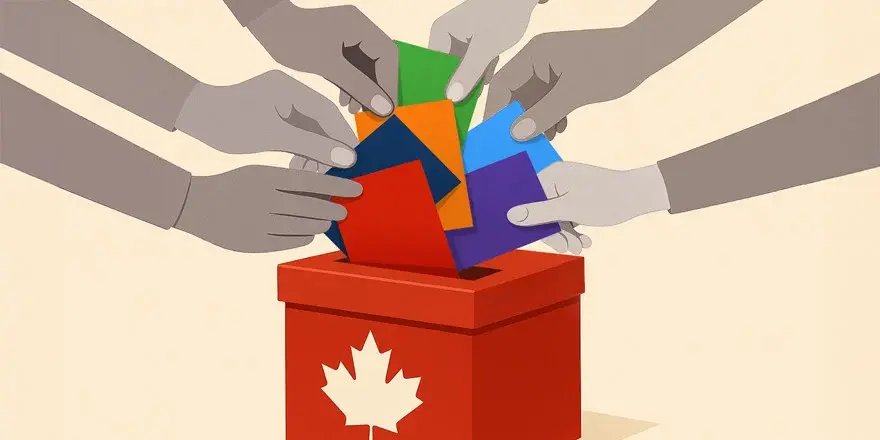
My first federal and provincial elections were in 2015. I took the responsibility seriously. I read about the platforms of the different candidates, talked with friends, and tried to educate myself before making a decision. At the time, I didn’t fully understand that, federally, the main competition tends to be between the Liberal Party of Canada and the Conservative Party of Canada, and that other parties rarely form government. Provincially, however, the New Democratic Party (NDP) seemed to have a more realistic chance of competing. In the end, I decided to vote for the NDP in both the federal and provincial elections. I was so incredibly excited to be able to vote. However, I vividly remember coming home from my high of voting for the first time and my dad asking me after the federal election who I had voted for. When I told him it was the NDP, he reacted rather strongly. He criticized my voting decision by saying something along the lines of, “How dare you vote for a socialist party? We left a socialist regime for you to vote for a socialist party?” I responded by saying, “At least I didn’t vote for a leader who considers us second-class citizens.”
That moment made something very clear to me: my parents and I hold fundamentally different political views, and politics would likely always be a difficult subject for us to navigate together. Eleven years later, in 2026, that still holds true, politics remains one of the most challenging topics for us to discuss. Over time, I’ve tried to set a boundary by expressing that I’d rather not engage in political conversations with them. There have been occasional exceptions, but for the most part, avoiding the topic has helped me protect both my peace and my relationship with them. It prevents the frustration and anger I sometimes feel when faced with my dad’s political choices and my mom’s decision to follow his lead at the ballot box. I’ve encouraged my mom to make informed decisions and I have offered, many times, to go through party platforms together, help break them down in a way that feels accessible, and by translating them into Spanish for deeper understanding. Despite that, she continues to defer to my dad’s choices. So, I have decided to let them be as I am not going to change their way of thinking at this stage of their lives. Lately, I’ve come to recognize that some right-wing political ideologies conflict with what I see as fundamental human rights. That creates a deep and difficult divide between us, because I simply see the world differently. I believe strongly in equal rights and in protecting marginalized communities. At the same time, the broader political landscape has become increasingly frustrating to navigate as I’ve gotten older. That frustration is only heightened by the knowledge that my parents are supporting policies that run counter to the values I hold most important.
Now that I pay closer attention to politics than I did in the past, it often seems that many politicians prioritize their own agendas rather than the well-being of the people they represent. Furthermore, the integrity of their stated values is frequently compromised when donor priorities conflict with policy outcomes. As a result, voting can sometimes feel like an impossible decision. Many ordinary people are left asking themselves the same question during elections: who should we vote for when the choice often feels like selecting the lesser of two evils? In my recent voting experiences, I have found myself voting more strategically, even when I do not fully support the party I am choosing. As I mentioned before, smaller parties rarely form government, which can be disappointing for voters who feel more aligned with their platforms. Because of this, I’ve found myself voting more strategically by choosing the party with the strongest chance of forming government rather than the one that most closely aligns with my personal beliefs. It’s a frustrating position to be in. Ideally, I would vote for the party I genuinely want to see lead, not simply the one best positioned to win. I also often feel conflicted within parties themselves. There are times when I generally agree with a party’s platform but struggle to support its leader. For example, I’ve voted for the Liberal Party on multiple occasions. While there were policies I supported, I wasn’t always satisfied with how certain decisions were implemented under Justin Trudeau’s leadership. Still, in those moments, I felt that the Liberal government’s direction aligned more closely with my values than that of the Conservative Party.
Core Values That Guide My Political Leanings

At the heart of my political views lie several core values that influence how I interpret issues:
Equality: Political, economic, social, legal, racial, and opportunity.
Rights: Human, women's, LGBTQ+, civil, indigenous, worker's, disability, immigrant & refugee, religious freedom, environmental, abortion, and children's.
Freedom: Religion, speech, press, protest, thought & expression, political participation, movement, and association.
Individualism: Economic, political, classic, moral, and social.
Justice: Representation, political participation, government accountability, fair & equal laws, and protection rights.
Democracy: Political participation, rule of law, free & fair elections, transparency, accountability, and protection of rights & freedoms.
Community: Collective well-being, solidarity & cooperation, and balancing individual & collective interests, and civic-engagement.
Responsibility: Protecting rights & welfare, leader accountability, sustainable policies, and ethical-decision making.
Human dignity: Political inclusion, ethical governance, respect for individuals, and non-discrimination.
These values do not always align neatly with a single political party or ideology. Instead, they guide my evaluation of policies and candidates on a case-by-case basis.
Here is what I value the most in policies and politics:
Women's rights
LGBTQ+ 2 spirit rights
Access to safe and legal abortion because it is important to have a CHOICE
Racial equality (no race or ethnicity is above others)
Indigenous rights and reconciliation
Worker's rights, fair wages, and unions
Immigration, pluralism, and multiculturalism inclusion
Accessible, high-quality public healthcare and education for all, complemented by the availability of private options
Environmental protection and climate action
Affordable housing and homelessness solution
Mental health awareness and support services
Market regulations & economy
Prevent exploitation, especially in the workplace
Accessible social programs for all, but especially for low income families
Welfare capitalism
A justice system that works and it isn't easily swayed by money, influence, connections, or race
Programs for former inmates re-entering society
Regulated capitalism
Progressive taxation
Ending nuclear power. No nation has a need for nuclear weapons
Accessible dental and pharmacare
Affordable post-secondary education
Investment in renewable energy
Regulations to reduce pollutions and protect ecosystems
Expanded disability benefits & supports
Elder care support
Accessible MAID
Paid parental leave
Additionally, I strongly believe in the separation between church and state as religion should not have any kind of influence or sway on political decisions.
My Political Leanings
Life experiences and current events often have a strong influence on political leanings. Issues such as climate change, social justice movements, and economic shifts highlight the importance of maintaining adaptable perspectives. For instance, witnessing the effects of climate change firsthand has strengthened my support for sustainable policies and for economic diversification, particularly in regions where economies depend heavily on resource extraction industries such as minerals, oil, and natural gas. Similarly, social movements advocating for racial equality have deepened my understanding of systemic issues within society and underscored the importance of reform and stronger protections for vulnerable communities. Furthermore, economic challenges such as rising inequality, inflation, homelessness, poverty, and job insecurity have pushed me to consider policies that strive to balance economic growth with fairness and social stability.

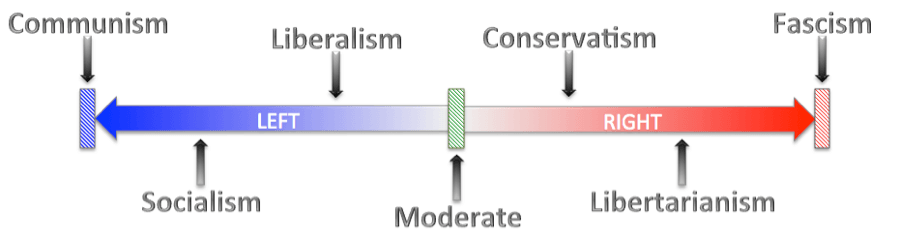
When discussing the political spectrum, people often overlook the fact that it is fluid and shaped by individual experiences. Rather than being fixed, political views can shift over time in response to changing circumstances and perspectives. Recently, however, there has been a tendency to label individuals strictly as either “left” or “right,” ignoring the existence of a political center and the many gradations within each side. I find this oversimplification frustrating, as it fails to capture the complexity of people’s beliefs, which are rarely fully defined by a single position on the spectrum.
If I were to label myself, I would find myself on the centre-left of the political spectrum, often associated with liberal or progressive perspectives. This position is largely defined by its approach to key areas such as social issues, public services, environmental protection, and the economy. It emphasizes balancing economic growth with fairness, supporting accessible public services, promoting social equality, and addressing environmental challenges through sustainable policies. Under today’s political labels, some might describe me as “radical left, leftist lunatic, woke, libtard, or in the famous words of Donald Trump: a radical left scum.” However, I do not fully identify with that characterization, as my beliefs are more nuanced and aligned with a center-left perspective. While I understand how others may choose to frame my positions, I am comfortable standing by my values, even if they are sometimes misunderstood or oversimplified. Essentially, I do not care whether people call me a libtard or woke and most importantly, it does not offend me. Caring about others and the environment is a core value I am unwilling to change. I will continue to be an ally and support the minorities because everyone deserves to exist and be seen in society.
Challenges in Expressing Political Views Today
In today’s increasingly polarized climate, expressing political views openly can feel not only difficult, but at times genuinely risky. Social and professional consequences ranging from strained relationships to reputational harm often create an environment where many people feel pressured to align with dominant group perspectives rather than speak honestly. This pressure discourages nuanced thinking and makes it harder to engage in good-faith dialogue, where uncertainty, complexity, and the possibility of changing one’s mind are not only accepted but valued. As a result, public discourse often becomes flattened and adversarial. Positions are framed in binary terms, leaving little room for middle ground or thoughtful disagreement. Yet many of the issues shaping modern policy and legislation, whether related to governance, rights, or social structures, are deeply intertwined with questions of morality, human dignity, and the appropriate limits of institutional control. These are not simple matters, and they deserve careful, reflective conversation rather than reactive or tribal responses.
Engaging across ideological divides has also become more emotionally taxing. Conversations with individuals who strongly identify with movements such as MAGA or its Canadian counterpart (Maple MAGA) can feel particularly challenging. In many cases, people on all sides of the spectrum draw heavily from information ecosystems, known as echo chambers, that reinforce their existing beliefs. This can lead to the repetition of claims that are sensationalized, incomplete, or misleading, making meaningful dialogue difficult. When both sides feel unheard or misrepresented, discussions can quickly become frustrating, painful, or dangerous. At the same time, it’s important to recognize that this dynamic is not unique to any one group. The broader issue lies in the fragmentation of shared reality and the decline of trust in common sources of information. Rebuilding the capacity for constructive conversation will likely require a renewed commitment to intellectual humility, critical thinking, and empathy along with a willingness to question not only others’ assumptions, but our own. Ultimately, if open dialogue continues to erode, so too does our ability to navigate complexity as a society leading to further divide. Preserving space for honest, respectful disagreement may be one of the most important challenges we face when discussing politics.
Conclusion

Politics has always been complex, but in recent years it feels especially exhausting. There’s a growing sense of polarization that seeps into everyday life, shaping not only policy but how people see and treat one another. It often seems like division is no longer an unfortunate byproduct of politics, but a deliberate strategy, something that certain leaders and public figures lean into because it energizes support, even at the cost of unity. Living in this kind of climate can feel overwhelming. The constant stream of crises, outrage, and conflict creates the impression that the world is perpetually on fire. It becomes difficult to step away or find peace when every headline reinforces the same cycle of tension and instability. Over time, that cycle can wear people down, leaving them feeling powerless or disconnected. What makes it even harder is the sense that priorities are misplaced. Governments and institutions often appear more focused on maintaining power, advancing agendas, or protecting economic interests than on safeguarding the planet or addressing urgent human needs. The environment, which sustains all life, is frequently treated as secondary, despite the long-term consequences of that neglect.
At the same time, social divisions whether rooted in religion, ethnicity, race, or sexual orientation continue to be amplified rather than healed. These aspects of identity, which should be sources of culture, understanding, and connection, are too often used to separate people or justify inequality. It’s painful to witness how easily empathy can be overshadowed by fear, misunderstanding, or political gain. Economic inequality adds another layer to this frustration. The gap between the wealthy and the rest of society keeps widening, and it raises difficult questions about fairness and responsibility. When so many people struggle to meet basic needs while immense wealth accumulates in the hands of a few, it can feel like the system itself is fundamentally out of balance. The idea that extreme wealth could significantly alleviate issues like hunger or homelessness, yet often does not, only deepens that sense of injustice. Altogether, these realities can make the current moment feel heavy and discouraging. But beneath that frustration is something important: a desire for a more compassionate, equitable, and thoughtful world. That feeling, while painful, also reflects a deep awareness of what’s at stake and a hope, however strained, that things could be better than they are now.
Exploring my own political beliefs has helped clarify what truly matters to me when choosing a party or leader. It’s no longer just about policies or platforms. It’s about values, empathy, and a sense of responsibility toward others and our environment. These reflections have also shaped how I navigate my personal life, influencing the relationships I build and the communities I choose to be part of. I find myself naturally drawn to people who share a similar commitment to compassion, fairness, and respect. In today’s world, political views often extend far beyond traditional politics. They can reflect how someone sees others, how they define dignity, and how they believe people should be treated. For me, these are not abstract ideas, but they are rather fundamental principles. They guide how I engage with the world and the standards I hold for the people around me. Because of that, I’ve become more intentional about where I stand and who I align myself with. I cannot support or associate closely with individuals who believe it is acceptable to dehumanize others, especially marginalized or minority groups. Everyone deserves to be treated with basic humanity and respect, regardless of their background or identity. Standing firm in that belief is not just a political choice for me, it’s a personal one, rooted in the kind of world I want to live in and help create.
Silvia C. Fernández García


Comments